

The more I build around GTM agents, the more I think the dangerous part is not that the system misses everything.
It is that the system finds too much and has nowhere useful to put it.
A champion goes quiet. A field changes source. Product usage drops. A late-stage deal starts showing risk. The novelty layer can help decide that those changes deserve attention. But attention by itself is not work.
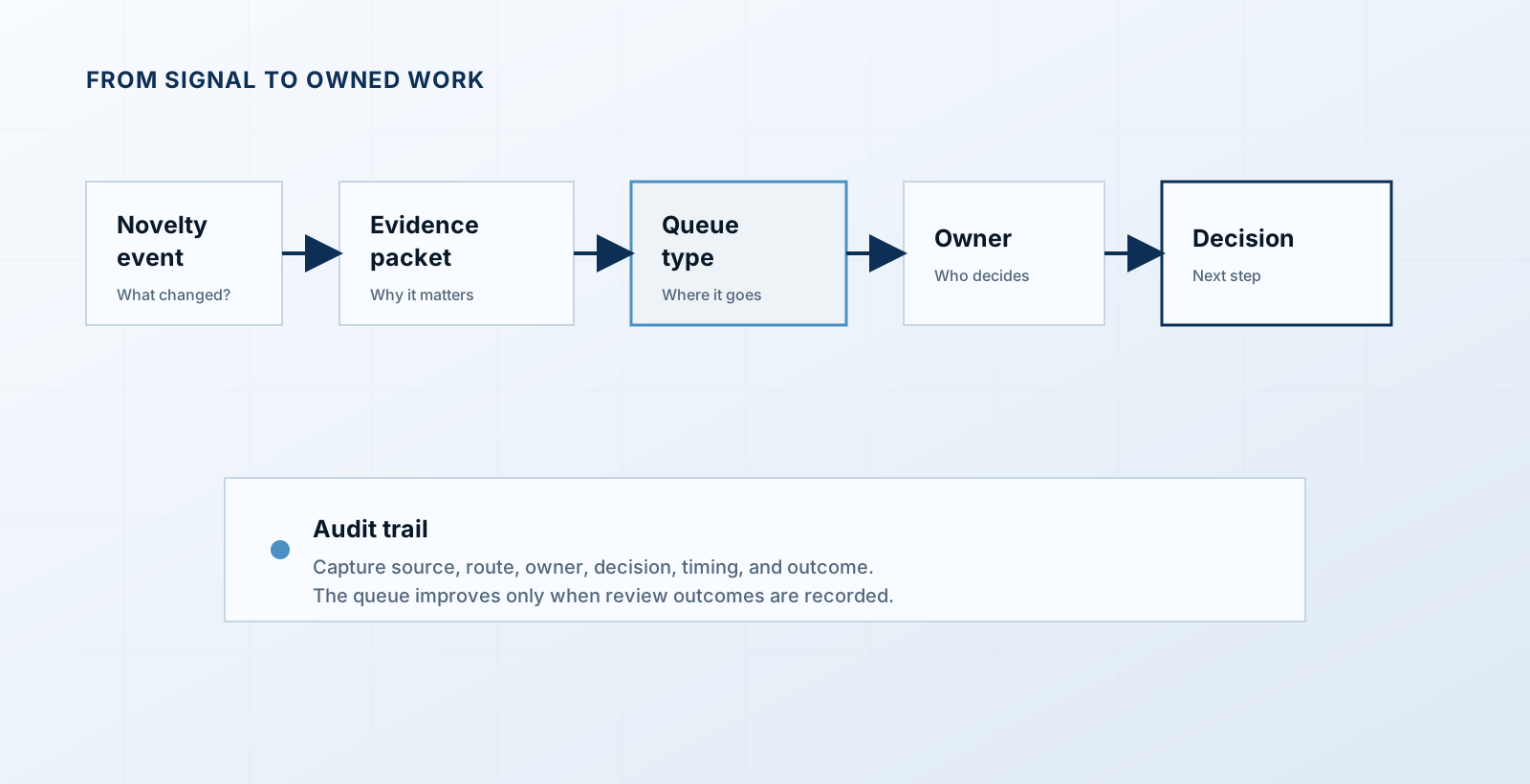
Work starts when the signal has an owner, a route, a deadline, an evidence packet, and a decision path.
A GTM agent does not become operational when it detects something. It becomes operational when the finding has somewhere responsible to go.
Attention is not the same as work
This is where a lot of systems start to drift. They get better at surfacing changes, but the human still has to decide what the change means, who owns it, how urgent it is, and whether anything should happen next.
That can look useful in a demo. The agent found a risk. The agent wrote a summary. The agent created a notification. But if that notification lands in the wrong place, or without enough context, it just becomes another thing someone has to interpret.
The review queue is the operating layer between detection and action. It is where a signal stops being an observation and becomes owned work.
What a review queue has to decide
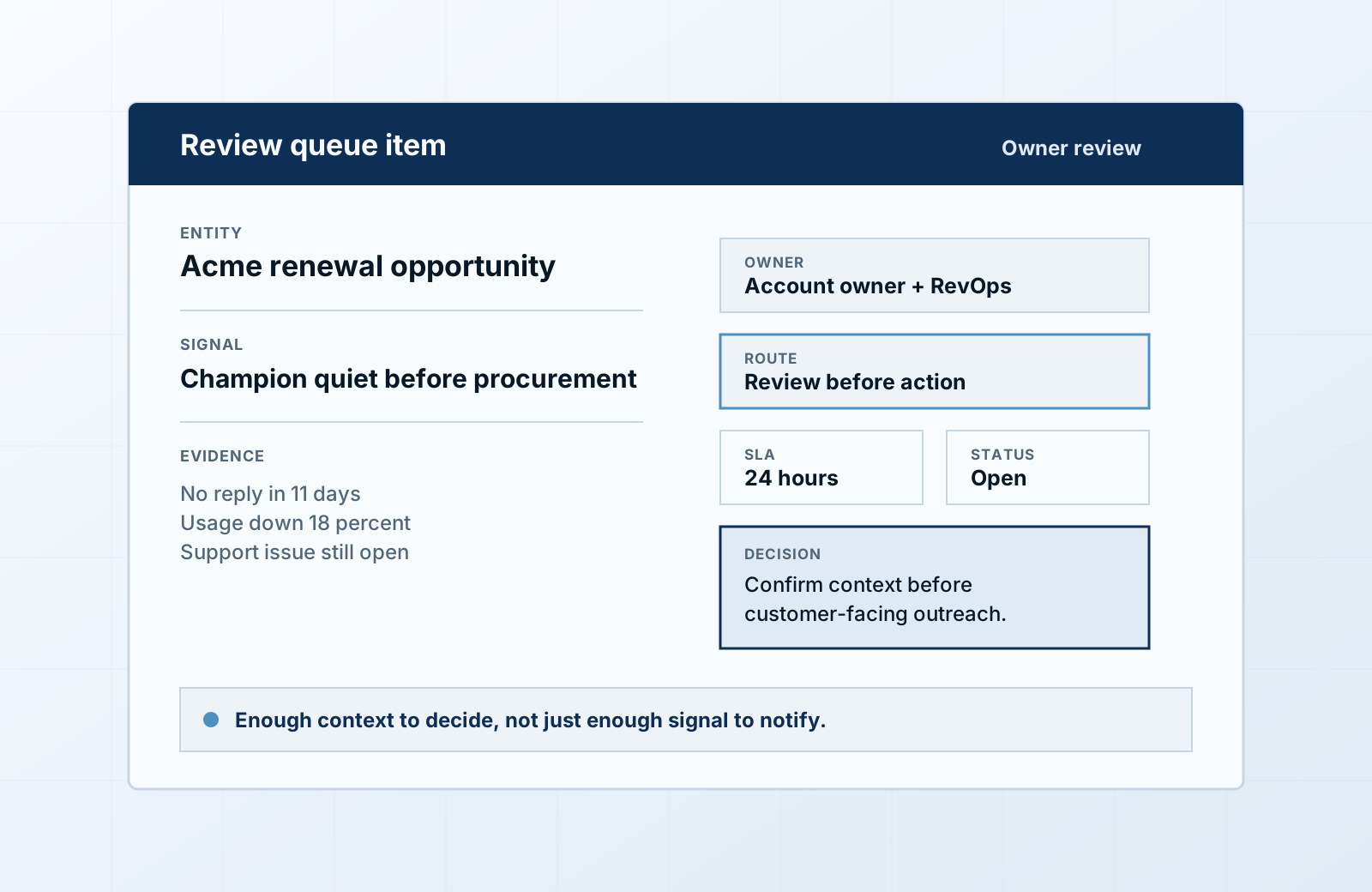
A useful queue item should answer five questions before anyone has to open the CRM, read the call notes, or reconstruct the context.
Who owns this? How urgent is it? What evidence supports it? What action is allowed? What happens if no one reviews it?
Those questions matter because not every item deserves the same path. A low-risk activity pattern can be watched. A late-stage deal risk might need the account owner. A forecast-impacting signal may need manager review. A source conflict or rule mismatch may belong with RevOps before it touches the account team.
The four queue types
I would not start with one universal review queue. That usually turns into a catch-all. The cleaner version is to separate the route by the type of operating decision required.
A watch queue is for lower-urgency pattern tracking. The signal is worth remembering, but it does not require immediate action.
An owner review queue is for account, opportunity, contact, or field owners. This is where a person closest to the record decides whether the signal changes the next step.
A manager escalation queue is for business impact or timing risk: late-stage deal movement, renewal risk, forecast impact, or customer communication that should not wait.
A system audit queue is for the operating layer itself: source conflicts, field ownership drift, automation behavior, permission mismatch, or rules that are producing unexpected outcomes.
Why this matters for RevOps
RevOps should not only wire alerts. It should design the review path.
That means deciding what gets routed, who owns the first look, what evidence has to be attached, what the SLA is, what action can be taken, and what outcome needs to be recorded.
This is not just process cleanup. It is agent safety and agent usefulness at the same time. Without a review queue, the agent can find things but cannot reliably turn them into operating progress. With a queue, the system can learn which signals were useful, which were false positives, where review slowed down, and which actions should stay human-owned.
What to build first
I would start narrow. Pick one place where attention is expensive and mistakes matter: high-value accounts, late-stage opportunities, renewals, or source conflicts in critical CRM fields.
Then build one queue around that motion. Each item should include the entity, signal, baseline, evidence, suggested route, owner, status, and outcome. Keep the first version boring. The point is not to automate every action. The point is to make the review path visible and repeatable.
Once that queue works, the system can improve. Rules can be tuned. Routes can be split. Owner patterns can be cleaned up. Review outcomes can teach the agent which signals actually changed a decision.
That feedback loop is where the queue becomes more than a holding area. It becomes the operating memory of how the business handles change.
Where this goes next
The review queue only works if the signal brings enough context with it. A reviewer needs to know where the data came from, how fresh it is, which system owns the field, and whether the value was observed, computed, inferred, or written back from another workflow.
That is where the next layer comes in: provenance. Not just moving data into the CRM, but carrying the source, ownership, freshness, and write policy that make the queue trustworthy.
Attention creates the candidate. The review queue creates the work. Provenance makes the work trustworthy.