

The easiest mistake with AI spend is treating it like another line item in the software budget.
It is starting to look more important than that. For startups, AI spend is becoming part of the operating model: how much work the company can move without hiring, how much of that work is actually useful, and how much hidden review burden gets pushed onto the founder or first operator.
That matters because the early-stage story around AI is often a fundraising story. We can stay lean. We can move faster. We can use agents instead of adding headcount. We can make one person operate like a small team.
Some of that is real. Some of it is just software burn wearing a productivity costume.
AI does not make a startup lean by existing in the stack. It makes a startup lean only when a workflow becomes cheaper, faster, and more reliable than the human process it replaced.
That is the standard I think founders and investors are going to need. The question is no longer whether the company is using AI. The question is where AI has changed the cost and quality of work.
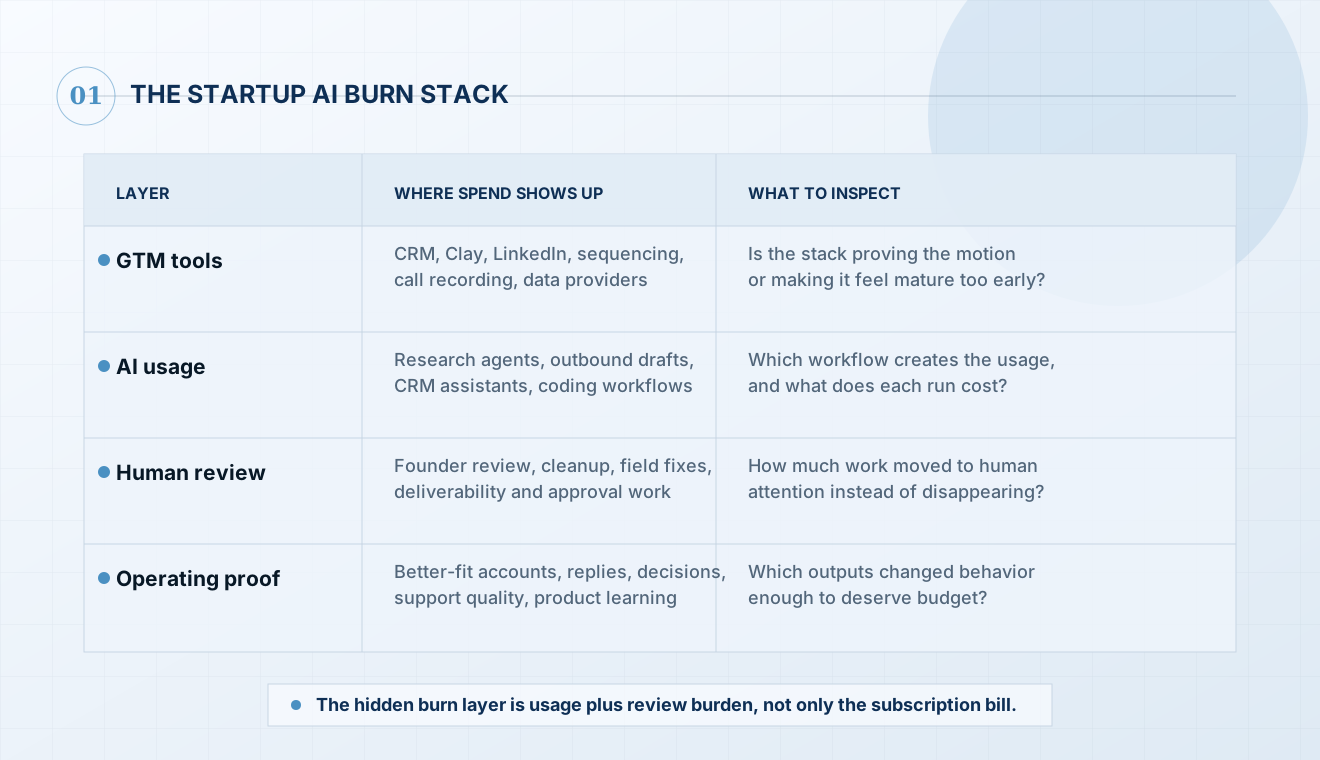
The GTM Stack Already Hid Burn
Startups rarely wake up one day and decide to buy an expensive GTM operating system. The stack grows because each new problem feels practical.
Pipeline needs a home, so the company buys a CRM. Account research takes too long, so enrichment shows up. Outbound needs more volume, so sequencing gets added. Customer calls disappear after they happen, so call recording becomes necessary. Reporting is messy, so analytics enters the stack. Then routing, data providers, automations, and internal tooling fill the gaps between them.
The bill is only one part of the cost. A GTM tool becomes expensive when it starts asking for operating maturity the company has not built yet: clean fields, ownership rules, routing logic, review habits, message discipline, and someone who knows when the system is lying.
That is why early GTM stacks can be deceptive. They make the company feel more mature than the motion actually is. Better tools can hide the fact that the ICP is still soft, the message is still unproven, and the handoffs are still mostly founder memory.
AI sits on top of that stack and makes the maturity gap louder.
AI Spend Is A Claim About Replaced Work
When a startup uses AI to stay lean, it is making a claim about work that no longer needs to be hired for yet.
That claim needs proof. If AI is replacing account research, the output should produce better-fit accounts or faster learning. If AI is replacing outbound labor, the drafts should become replies, meetings, or useful market feedback. If AI is replacing internal ops, the system should reduce ambiguity instead of creating more cleanup.
The dangerous version is more subtle. AI does enough to feel useful, but not enough to remove the work. The founder still reviews every draft. The operator still cleans the CRM. The team still debates whether the account list is any good. The company gets the software bill and keeps the human bottleneck.
That is where startup AI spend becomes a burn layer. It sits between software and hiring, carrying some of the cost of both.
The Investment Question Changes
Investors are going to hear a lot of versions of the same sentence: we can do more with fewer people because of AI.
The sentence is incomplete until the founder can name the workflows. Which work moved from a person to software? What does it cost per month? Where does the output land? Who reviews it? What decision, customer action, or revenue motion changed because of it?
A strong answer is specific. The company can point to three or four workflows where AI has changed the shape of the business. Maybe it shortened account research. Maybe it made support coverage cheaper. Maybe it helped the team find a sharper wedge from customer calls. Maybe it reduced the amount of engineering time needed for internal tooling.
A weak answer sounds like activity. More leads researched. More emails drafted. More summaries generated. More CRM fields touched. More dashboards produced.
Activity is not leverage. It is only leverage when the work changes a decision, removes a bottleneck, or creates output the business can trust.
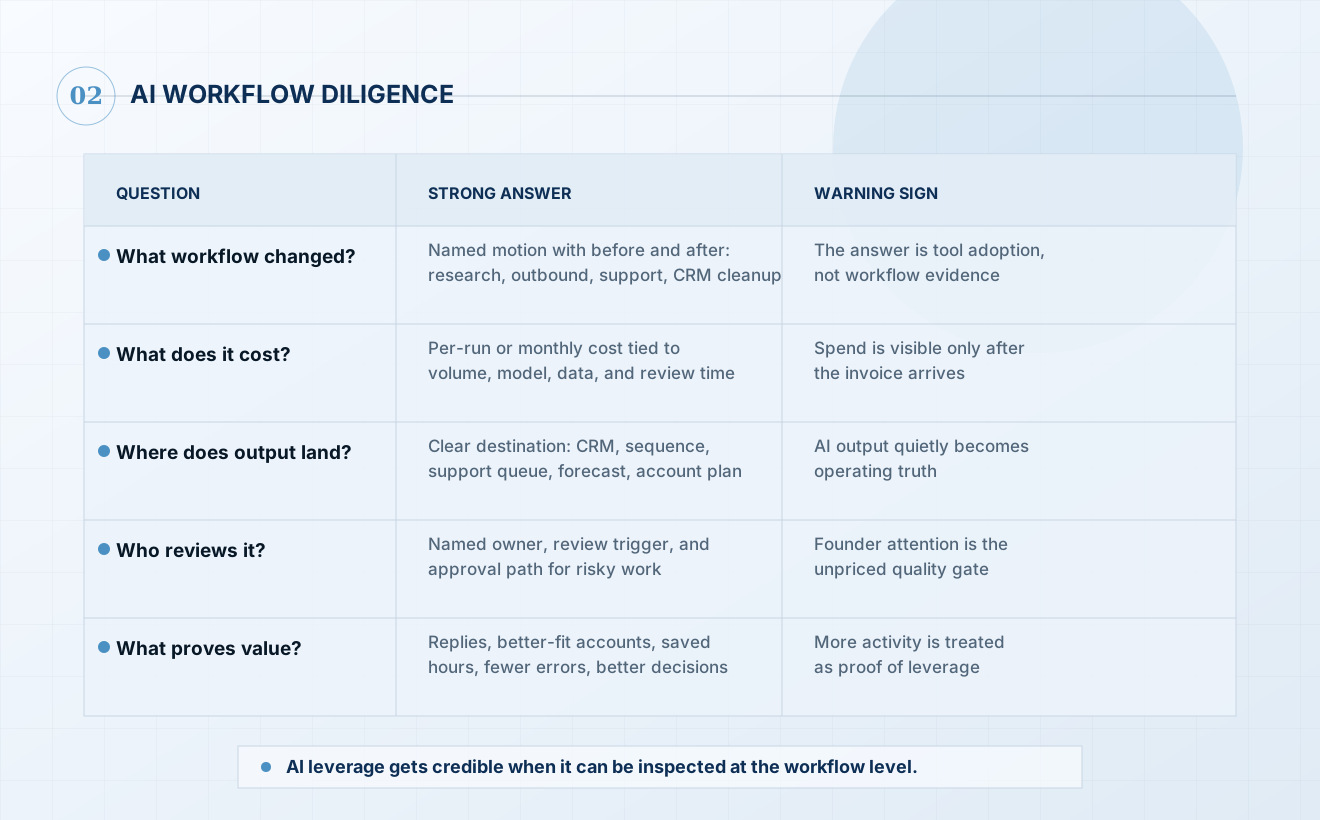
The best AI leverage story is also willing to name what stayed human-owned. That tells me the team is thinking in workflows, not chasing coverage. It has learned where software helps, where review is still expensive, and where the company is too early to automate.
That kind of answer feels less flashy. It is much more believable.
AI Spend Behaves More Like Cloud Spend
SaaS pricing trained teams to think in seats. A person has access, the company pays for the license, and finance can roughly model the bill against headcount.
AI breaks that intuition. The same employee, same tool, and same week can create very different costs depending on the workflow. Summarizing a call, researching five hundred accounts, generating outbound drafts, or running an agent across CRM history, product usage, support notes, and call transcripts are not the same economic event.
This is why the Uber Claude Code budget story mattered. The lesson was not that AI coding tools are bad. The lesson was that successful adoption can still break the cost model if finance, engineering, and operators are measuring usage instead of workflow value.
Startups face the same pattern at a smaller scale. A few thousand dollars a month is real runway. The danger is not the absolute bill. The danger is a bill that grows because the company is generating more work than it can learn from.
The Hidden Cost Is Untraced Work
The money is only one side of the problem. The harder part is what happens after AI work enters the operating system.
A researched account becomes a CRM record. A generated insight becomes a segment. A segment triggers outbound. An AI-written note changes how a rep follows up. A support summary influences product priority. A forecast explanation ends up in an investor update.
Once AI output starts moving through the business, the company needs a way to answer basic questions after the fact. What did the system read? What did it assume? Who approved the action? Which permission allowed the write? Which downstream workflow moved because of it?
Without that chain, the company gets a strange kind of operational debt. The work feels automated while it is going well. The moment it breaks, nobody can tell whether the issue came from the data, the prompt, the model, the workflow rule, the human review, or the write permission.
That is not a compliance edge case. It is the normal risk of giving software more room to act inside a young company.
Startups Need Operating Rules Earlier
Larger companies will turn this into a finance, RevOps, security, and procurement conversation. Startups usually do not have that many functions yet, but the work still exists.
Someone has to decide which AI workflows can read customer data, which ones can write to the CRM, which ones can send work to a human, which ones can spend credits in the background, and which ones need to stay as draft-only tools until the team trusts the output.
Those choices are bigger than tool configuration. They decide where judgment lives inside the company.
This is why RevOps thinking shows up earlier than founders expect. Even a small team needs some version of field ownership, review gates, source context, approval rules, and usage visibility once AI starts touching GTM work.
The Run Ledger Belongs In The Cost Model
A bill tells you what the company paid. A usage dashboard tells you how much the tool ran. Neither one tells you whether the workflow deserved to keep running.
That is the role of a run ledger. It does not need to start as a large compliance system. The first version can be simple: what the AI read, what it produced, where the output landed, who reviewed it, what changed downstream, and whether the result was worth the cost.
If an AI workflow researches accounts, track which accounts became real pipeline. If it writes outbound drafts, track which drafts survived review and created useful replies. If it flags pipeline risk, track whether anyone changed a decision because of the flag. If it cleans the CRM, track the fields where it keeps needing human correction.
The ledger turns AI from a vague productivity story into a workflow economics story.
The Real Question Is Operating Leverage
AI spend is going to keep growing because the upside is real. Small teams can learn faster, sell with better context, support customers with less drag, and build internal tools that used to require more engineering time.
The mistake is assuming that every AI workflow belongs in the leverage category. Some workflows accelerate learning. Some replace real labor. Some create review queues, cleanup work, and confidence problems the company has not priced in.
For a startup, the distinction matters. Every dollar of burn should either create learning, create capacity, or create an asset the company can keep using. AI spend that does none of those things is just another operating cost pretending to be strategy.
Using AI instead of hiring only works when the company can see the workflow, the cost, the permissions, and the output quality.
That is the benchmark shift. AI is not only changing what startups can do with small teams. It is changing what they have to prove about the work they no longer want to hire for.