

The GTM-agent conversation started in the right place. Revenue work needs control before it needs speed. A system that reads customer context, updates CRM records, drafts outreach, prioritizes accounts, or routes work across teams needs field ownership, source context, review paths, approval rules, and a record of what happened.
That control layer is necessary. Its job is evidence: pricing the workflow, not permission to run it.
The evidence trail has four parts: field ownership for trust, review paths for human cost, provenance for source context, and run ledgers for downstream movement. Those controls are not just governance. They are the raw material for pricing the workflow.
This is the place agent ROI gets misread. Teams point to activity because activity is visible: runs, prompts, summaries, tickets, drafts, enrichments, generated pull requests. The workflow economics sit one layer deeper.
AI usage is the expense line. Agent ROI requires a named workflow with a measurable change: lower cost, better quality, lighter review burden, or a business motion that moved.
That is the transition from agent architecture into AI operating economics. The architecture gives AI permission to touch the work. The evidence trail shows the work is worth paying for, or turns the spend into a new burn layer.
The enterprise data points in the same direction. PwC's 2026 CEO survey found that 56% of CEOs saw no significant financial benefit from AI, and only one in eight reported both cost and revenue gains. MIT's GenAI Divide work put the pilot problem in sharper terms: 95% of enterprise generative-AI initiatives showed no measurable profit-and-loss impact. The issue is not usage. The issue is workflow integration with financial proof.
Activity metrics
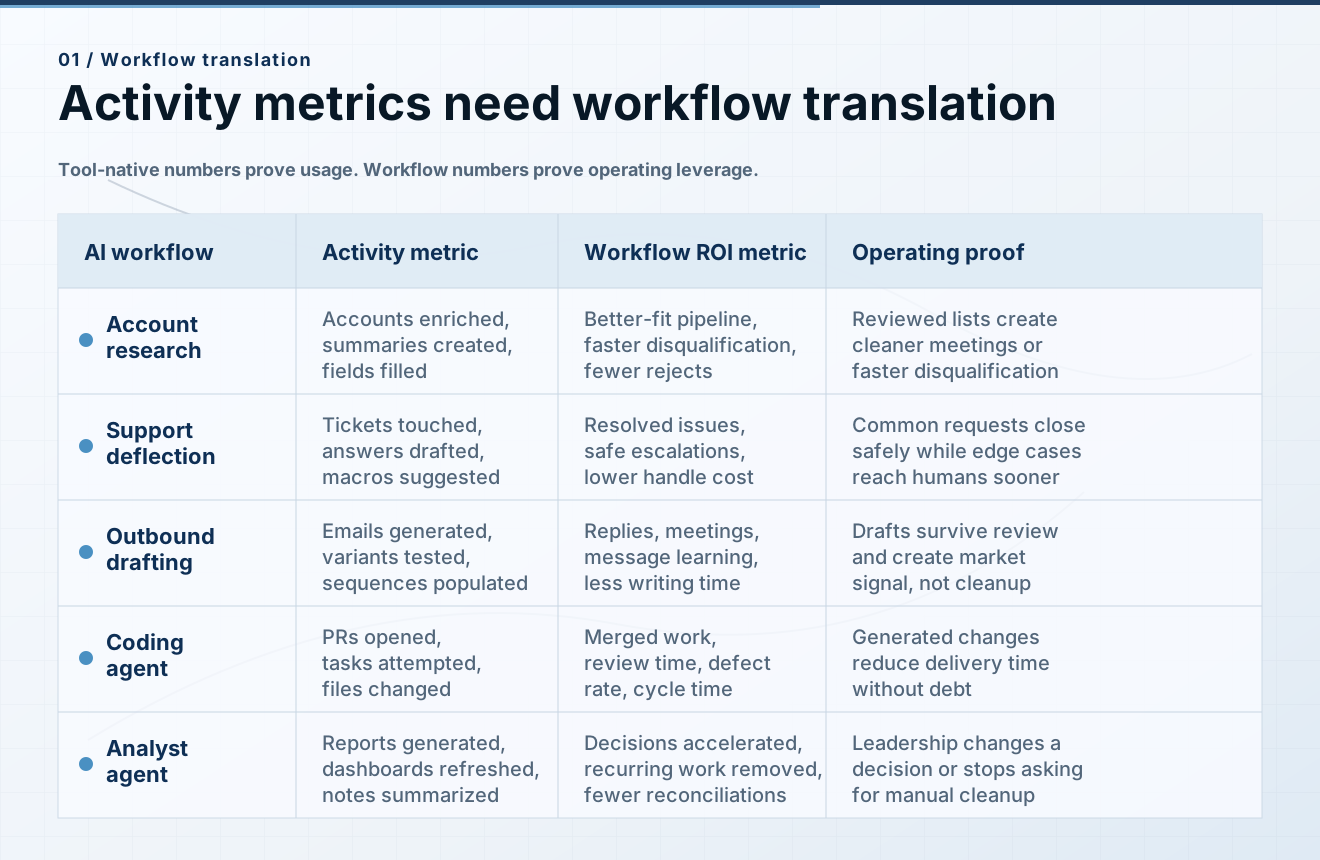
The easiest AI dashboard to build is an adoption dashboard. It counts users, runs, tokens, documents summarized, records touched, emails drafted, tickets handled, calls transcribed, and code tasks attempted.
Value shows up by workflow: account research through better-fit pipeline, faster disqualification, cleaner routing, and sharper market learning; outbound drafting through replies, meetings, message learning, and reduced writing time; support deflection through resolved issues, safe escalations, and lower handle cost; coding agents through merged, maintainable work with acceptable review cost.
The activity metric belongs inside the tool. The ROI metric belongs inside the workflow.
Review burden
AI tools make visible costs easy to count: monthly seats, model usage, request credits, and workflow lines in a usage dashboard.
The hidden cost sits in human review: checking account lists, rewriting outbound drafts, reviewing generated patches, cleaning CRM fields, approving support answers, and explaining AI output after it moves into an operating meeting.
The review burden matters because it often lands on the most expensive person in the company: the founder, the first GTM lead, the senior engineer, the RevOps owner, or the person with enough context to know the answer is wrong.
A workflow that looks automated while staying senior-review bound is not leverage. It is a new queue.
Coding agents show the review-burden problem in numbers. A 2025 study of GitHub Copilot adoption in open-source projects found more output, but also more maintenance pressure: core developers reviewed 6.5% more code and saw a 19% drop in original-code productivity. That is the hidden cost the model needs to catch.
The workflow card
A useful ROI review starts with a workflow card, not a model card, vendor scorecard, or generic AI policy. A workflow card names the work in plain operating terms.
The card records the human baseline: who owned the work, how long it took, what it cost, where quality broke, which downstream action depended on the output, and which failure created real business pain.
The AI version records the same workflow after automation enters: tool cost, usage cost, review owner, correction pattern, output destination, decision impact, and remaining human bottleneck.
Account research
Take account research. It is one of the first workflows a startup tries to automate. The old version is usually founder or SDR labor: build a list, scan websites, check LinkedIn, read recent company news, judge fit, write notes into the CRM, and decide which accounts deserve outreach.
The AI version looks better on the surface. The agent enriches hundreds of accounts, summarizes each company, suggests angles, and populates CRM fields. The activity dashboard looks strong: more accounts touched, more notes created, more drafts available.
The workflow card forces a stricter read. The useful output is not the number of enriched accounts. The useful output is a better-fit account list, faster disqualification, cleaner routing, sharper outbound, and fewer founder corrections. The cost includes the tool, the model runs, the enrichment source, the review time, and the CRM cleanup created by weak assumptions.
The useful version shrinks the pile requiring close human inspection. Plausible records with founder judgment still attached are just a larger queue. Both systems produce output. Only one changes the workflow.
The buyer question
The old buyer question sounded like procurement: which tool costs less, which platform has the better feature list, which vendor covers more use cases.
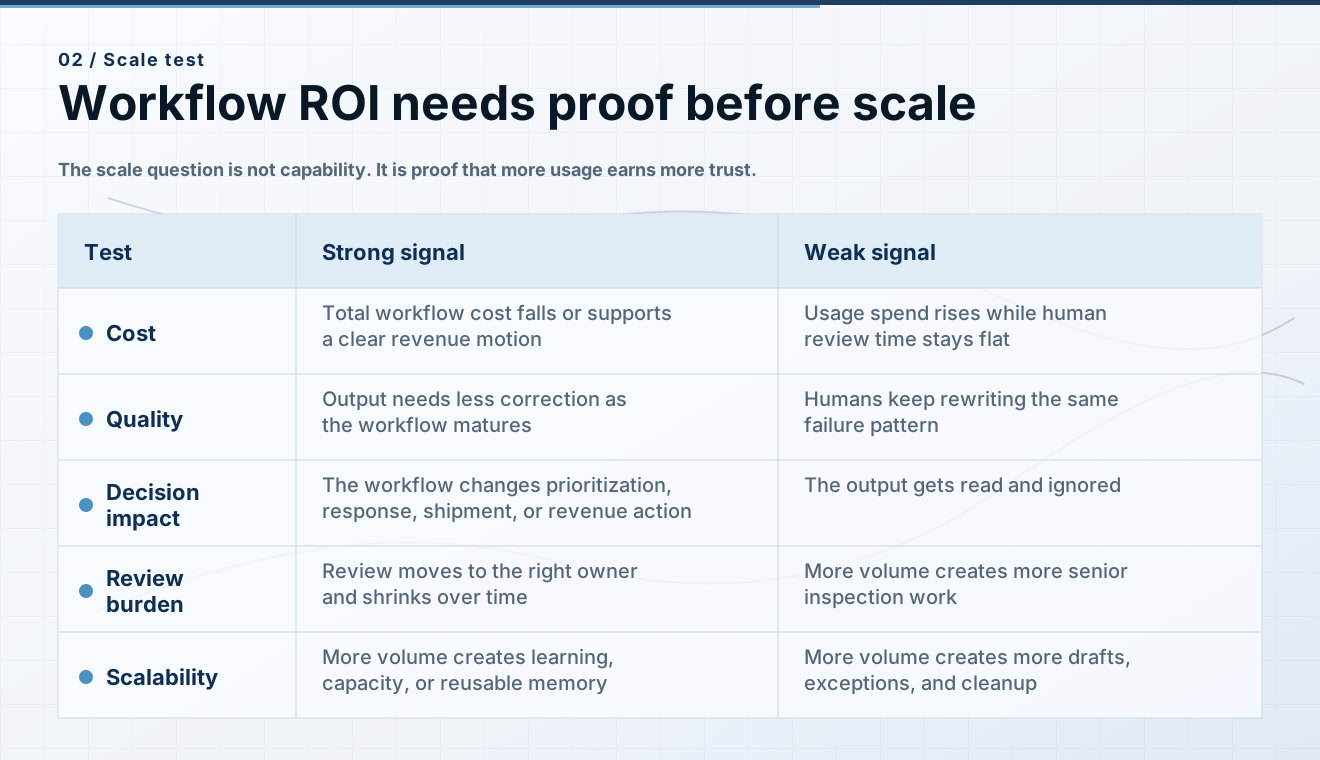
AI changes that question because the cost profile changes after adoption. More usage means more value, more waste, or more review burden. The same tool is cheap in one workflow and expensive in another.
Line-by-line manager review turns support deflection into hidden cost. Common issues closed safely reduce cost. Better-fit account research creates leverage; plausible CRM fill creates cleanup. Maintainable code creates capacity. Review floods create drag.
Klarna is the support case study everyone cites because the numbers are concrete: 2.3 million conversations in the first month, the equivalent work of 700 full-time agents, and an estimated $40 million profit improvement for 2024. The useful lesson is not that every support team gets those economics. The lesson is that the workflow was measurable: volume handled, resolution quality, customer satisfaction, repeat inquiries, handle time, and profit impact.
The same category contains leverage and burn. The workflow tells the difference.
The next layer
The earlier GTM-agent articles were about making AI safe enough to touch revenue systems. That body of work still holds: fields need owners, context needs provenance, actions need judgment, and review work needs an operating surface.
AI operating economics asks the next question. The controlled, measured, reviewable workflow needs economic proof that keeps it alive.
Model benchmarks and adoption charts will not answer that question. The answer comes from boring, durable evidence: lower cost, better quality, shorter cycle time, cleaner decisions, smaller review queues, reusable operating memory.
The positive cases look focused. McKinsey's 2026 analysis found top AI performers getting roughly three dollars back for every dollar invested, with many of the leaders concentrating AI in three or fewer domains. That is the bar for startups: fewer workflows, better instrumentation, clearer economics.
The practical standard
Stop asking about agent impressiveness. Ask what named workflow changed, what the old workflow cost, what the AI workflow costs now, who reviews the output, where the output lands, and which business motion improved.
A company with those answers has the beginning of agent ROI. A company without those answers has AI usage, AI spend, and a story that still needs operating proof.