
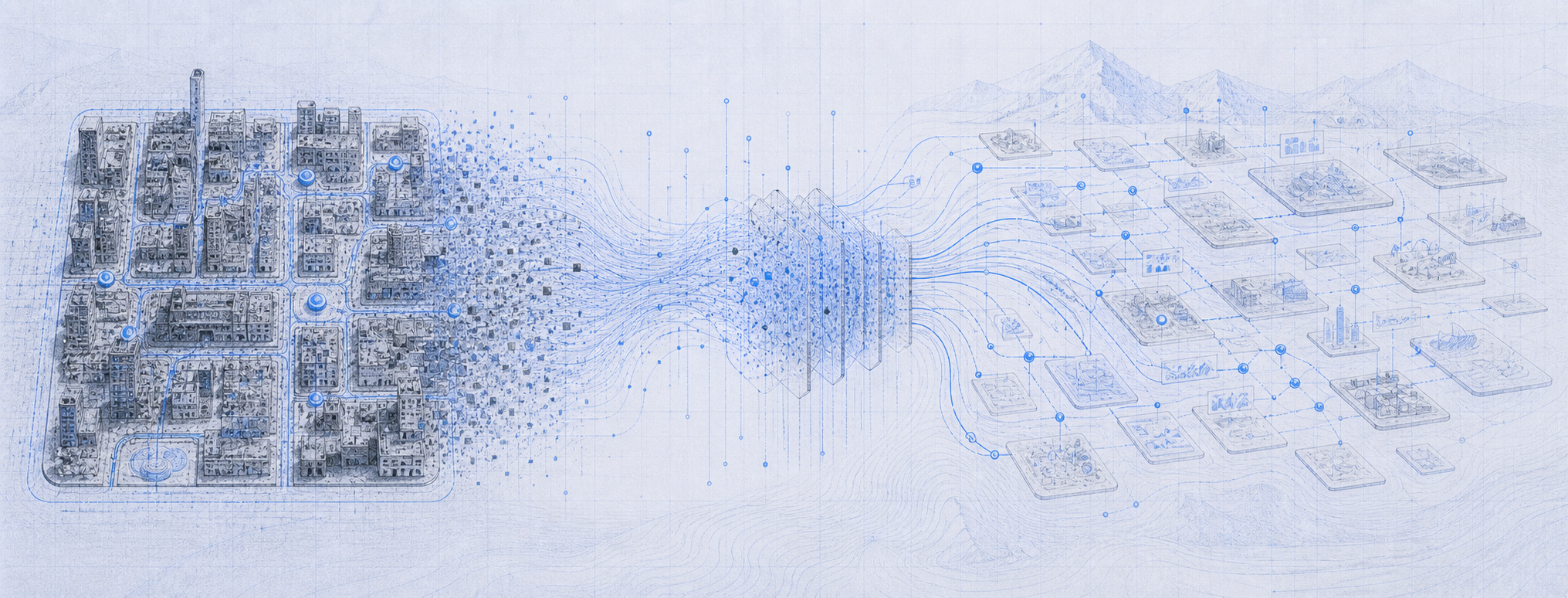
The China AI narrative is no longer theoretical. Models from DeepSeek, Qwen, Kimi, GLM, and adjacent open systems are sliding underneath Western software stacks, developer environments, enterprise workflows, agent products, support queues, coding tools, research systems, and internal operations.
That matters because it changes the old export story. China has spent decades exporting consumer goods and years trying to win more Western attention through apps, marketplaces, short-form media, social platforms, payment rails, and super-app logic. Western companies learned to use Chinese digital surfaces to sell into China. They built WeChat accounts, local social profiles, marketplace presences, and China-specific distribution habits.
That did not turn WeChat or Alipay into the daily operating layer for Western consumer life. The attention layer was harder to export than the goods layer.
Large language models travel differently. They bypass the consumer interface and move through APIs, open weights, private cloud deployments, developer gateways, local inference, fine-tunes, distillations, and products that never mention the model by name.
WeChat tried to export a consumer operating system. Chinese LLMs are exporting execution economics.
The WeChat Question Got Bigger
In 2023, I wrote about Twitter becoming a Western version of WeChat. The essay was really about bundling: one platform absorbing messaging, payments, identity, media, creators, merchants, commerce, and daily services into a single operating habit.
That thesis was early, but the interface was too literal. I was looking at the app layer. The more important AI question now sits underneath the app layer.
WeChat and Alipay proved the power of bundling inside China. They worked because identity, payments, merchants, services, and trust lived inside the same daily loop. A user could message, pay, book, shop, follow a business, use a service, and move money without leaving the same operating environment.
The AI version of that logic does not need one app to own the whole consumer relationship. It only needs the model to sit close enough to the workflow: support ticket, code task, account record, search result, research brief, data-cleaning step, agent run, or product action.
Cost Is The Export Wedge
The primary entry point for Chinese models is a price gap large enough to change how AI products are built.
JPMorgan's analysis puts the pressure in plain terms: some Chinese models are now reported to be 10 to 50 times cheaper per token than premium OpenAI and Anthropic-style systems. That difference matters less for a demo and much more for production. A prototype can afford one expensive model behind everything. A scaled workflow cannot.
Coinbase is useful here because the operating logic is public. Brian Armstrong has described keeping AI token usage high while lowering spend through cheaper default models, task-based prompt routing, caching, leaner context, and better cost visibility. The important detail is the model mix. Routine work can move toward cheaper models, including Chinese alternatives like GLM and Kimi, while premium models stay reserved for work that justifies the higher cost.
Perplexity shows the product-side version of the same shift. After DeepSeek R1 launched, Perplexity made R1 available inside its search platform by running the model on its own servers. Microsoft, AWS, and Fireworks moved in the same direction by bringing R1 onto Western cloud, developer, and inference platforms. The point was not to send users into DeepSeek's app. The point was to pull the model capability into existing Western products and infrastructure, keep more control over where queries run, and make the model usable through channels companies already trust.
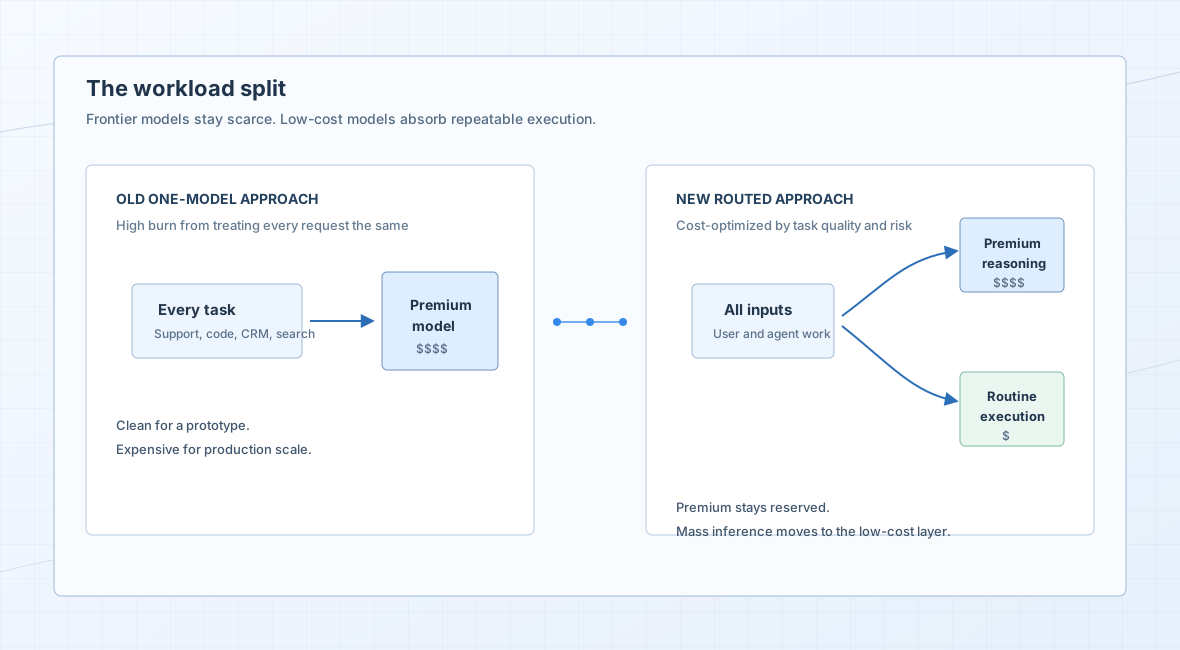
That pricing reality breaks the old one-model approach: every task sent to one premium frontier model. The smarter setup splits the workload by what the task actually requires.
Premium models keep the work that needs deep reasoning, complex strategy, regulated judgment, customer-facing edge cases, serious coding decisions, and high-trust synthesis. Cheaper models absorb routine execution: formatting, extraction, classification, CRM cleanup, boilerplate code, first-pass support drafts, research clustering, and internal summaries.
Chinese models do not need to win every high-stakes reasoning task. They can win the high-volume operational floor: the work running in the background, millions of times, where frontier pricing turns into a burn problem.
The Router Becomes The Control Plane
Multiple models create a new control problem. The router moves from developer plumbing into business infrastructure.
The super-app era created efficiency by bundling many actions into one interface. The model era reverses that pattern. It bundles many models behind one product experience.
The user sees the same product. The backend decides which model should handle the work: cheap classifier, local model, open-weight coding model, premium reasoning system, or human review queue.
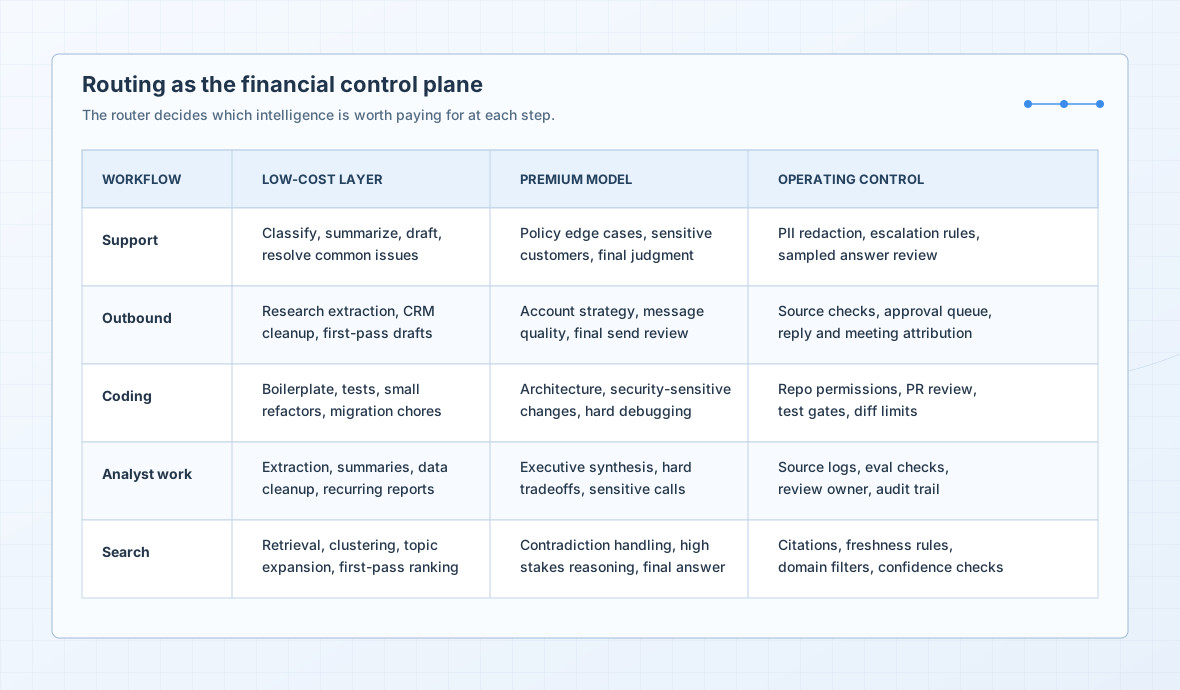
That makes the router a financial control plane. It evaluates every request against a practical question: how much quality does this specific task need, and what is the cheapest model that can finish it safely?
RouteNLP research frames routing around cost, latency, quality, and governance. One customer-service pilot reduced inference costs by 58% while maintaining a 91% response acceptance rate. Other routing work uses smaller self-hosted models, including Qwen and DeepSeek variants, for front-door classification before the expensive model call happens.
That is the hidden infrastructure version of the super app. The value is not a new home screen. The value is an operating layer that decides which intelligence is worth paying for at each step of the workflow.
The Security Story Is Different
Security concerns around international software exports are real. The language-model layer changes how companies manage that risk.
A consumer app asks users to place identity, payments, messaging, merchant activity, and behavioral data inside a vendor's operating environment. Open-weight models allow a more disconnected setup.
A company can run a DeepSeek, Qwen, Kimi, or GLM-style model locally, inside a private VPC, on U.S. infrastructure, or behind its own gateway. Data filtering, prompt scrubbing, redaction, access controls, logging, policy checks, evaluation harnesses, and human review can sit upstream from the model call.
That does not remove the risk. Weights still carry questions around provenance, licensing, training data, censorship, safety behavior, downstream use, and national-security exposure. Enterprise adoption still needs governance. Sensitive workflows still need controls.
The practical difference is deployment control. A company does not have to move its customer relationship into a Chinese consumer app for Chinese model architecture to shape the work. The model can operate as a stateless engine inside a controlled workflow.
The Split Underneath AI Products
The AI market is splitting by trust, data proximity, capability, and unit economics.
Western frontier providers keep a strong advantage in high-trust, highly regulated, deeply complex, and customer-sensitive work. That advantage matters. The most important workflows still need the best answer, the safest enterprise wrapper, and the strongest review posture.
The high-volume operational floor is moving faster. Everyday task execution wants low cost, acceptable quality, controllable deployment, and enough reliability to run repeatedly. That is where Chinese and open models can spread farther than Chinese consumer apps ever did.
The winners in AI platform infrastructure will not only be the companies with the single smartest model. The winners will be closest to the workflow: cheap enough to run millions of times, trusted enough to pass review, and capable enough to finish the job.
China may never export WeChat at global scale. It may not need to. The model layer is already moving through Western software in a way the app layer never could.